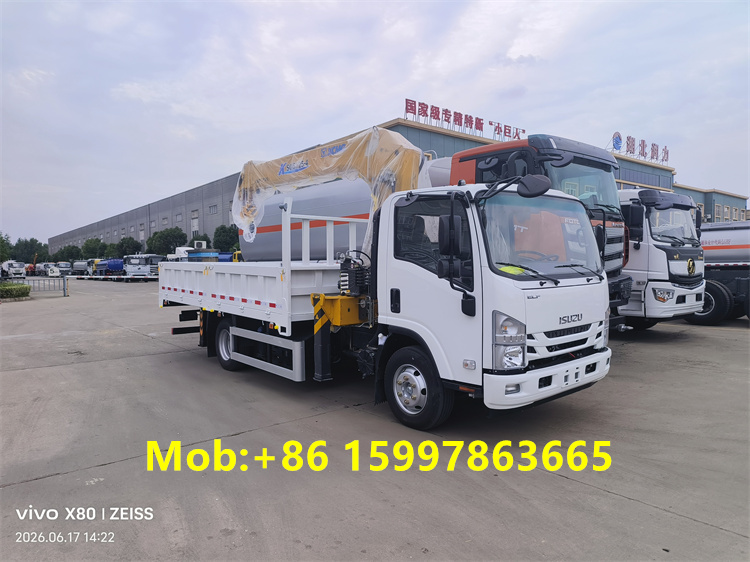
A truck crane is not just a single machine but a family of related units tailored to different jobs, environments, and lifting needs. From compact boom‑type units for local deliveries to heavy‑duty telescopic cranes for large infrastructure projects, the right type can make a big difference in how smoothly a task is completed. When matched with the right usage scenario, each variant becomes a smart blend of transport and lifting power that fits naturally into modern construction, logistics, and industrial workflows.Main types of truck cranesTelescopic truck cranes are the most common on construction and logistics sites. They use a straight, multipart boom that slides in and out, giving flexible reach and good lifting capacity in a compact package. These cranes are quick to set up and easy to manoeuvre, which makes them ideal for tight urban areas and repetitive lifting tasks. Knuckle‑boom or articulated truck cranes, on the other hand, feature a jointed arm that can bend and fold, allowing the operator to lift and place loads around obstacles such as buildings, trees, or other equipment. This type is often favoured for utility work, maintenance, and tasks where space is limited and precision matters more than raw tonnage.Heavy‑duty and specialized variantsFor larger projects, heavy‑duty truck cranes with higher tonnage ratings and extended boom lengths support tasks such as placing bridge girders, handling large steel structures, or moving heavy industrial machinery. These models are built on robust chassis designed to carry both the load and the crane’s own weight over long distances. Some specialized variants are optimized for rougher terrain or complex working conditions, offering stronger suspension, better traction, and more advanced stabilization systems so they can work on uneven or soft ground without losing stability. Each type is chosen based on the expected load, working height, site access, and how often the crane will be moved between locations.Everyday usage across industriesOn construction sites, truck cranes lift steel beams, concrete panels, roofing trusses, and precast segments, often working in tight spaces where larger fixed cranes cannot fit. Their ability to arrive on the road, deploy quickly, and start lifting helps keep fast‑track projects on schedule. In logistics, ports, and warehouses, the same units load and unload heavy machinery, generators, containers, and oversized cargo, reducing the need for extra lifting gear and simplifying the handover chain. Utility and infrastructure teams use them to install and service poles, transformers, and overhead lines, while industrial plants rely on them for machinery placement, plant retrofits, and routine maintenance. In emergency and recovery situations, their mobility and lifting capacity also prove valuable for debris removal, vehicle recovery, and disaster‑response work. This integration helps keep logistics lean, reduces idle time, and makes it easier to plan and coordinate work across multiple sites. By choosing the right type for the job—be it a compact telescopic unit for deliveries or a high‑capacity truck crane for major infrastructure—the operator or project manager turns a simple machine into a core part of an efficient, scalable workflow.
 Integration into broader equipment and transport ecosystems



 Integration into broader equipment and transport ecosystems


